Human Creativity vs Artificial Intelligence: Who Wins?

Naapbooks Insights • Creativity vs AI • 11 min read
Human Creativity vs Artificial Intelligence
Quick Answer: Neither fully "wins". Human creativity brings emotion, lived experience, and original intent that AI cannot replicate. AI brings speed, scale, and pattern-based generation that humans cannot match. In 2026, the strongest creative results come from combining both not choosing one over the other.
By 2026, machines can paint, write, and compose faster than any human ever could. AI tools generate a song, a short story, or a full illustration in seconds.
“So it's fair to ask: has artificial intelligence caught up to human creativity, or even overtaken it?”
The honest answer is more nuanced than a simple win-or-lose verdict. Human creativity and artificial intelligence aren't really competing on the same track. They're solving different problems, and understanding that difference matters more than picking a "winner."
This guide breaks down what makes human creativity distinct, what AI actually does when it "creates," where the two overlap, and what it means for your work, your art, or your business going forward.
What Is Human Creativity, and How Is It Different From AI?
Human creativity is the ability to generate original ideas, solutions, or expressions that come from personal experience, emotion, and imagination not just from recombining existing information.
AI creativity refers to a system's ability to generate new outputs (text, images, music) by recognizing statistical patterns in training data and producing novel combinations based on a prompt.
The core difference between AI and human intelligence comes down to this: AI processes information and predicts patterns at incredible speed. Humans create meaning shaped by memory, culture, emotion, and lived experience that no dataset can fully capture.
Human creativity typically draws on:
- Original ideas rooted in personal experience and real memory
- Emotional resonance that connects with other people on a human level
- Imagination the ability to picture something that has never existed
- Rule-breaking problem-solving that doesn't follow a predictable pattern
AI, by contrast, works by scanning enormous amounts of existing content, learning the statistical patterns within it, and generating new combinations that fit those patterns. It's powerful, but it isn't the same mechanism as human imagination.
Human Creativity in Action: Why Emotion and Intuition Still Matter
How Emotional Experience Shapes Creative Work
People create from something machines don't have: genuine feeling. An artist painting through grief, a musician writing about first love, a novelist building a character based on someone they actually knew this work carries weight because it comes from something real.
Real-world examples of this kind of creativity include:
- Painters turning personal hardship into visual art that sparks public conversation
- Musicians blending cultural heritage into new fusion genres
- Authors building characters from people and events in their own lives
- Designers solving problems they've personally experienced, with genuine empathy for the end user
The Role of Intuition in Creative Decisions
Humans also make creative leaps that don't follow a clear, logical path. A "gut feeling" that a design, a lyric, or a plot twist is right even before you can explain why is a real part of the creative process. This kind of intuitive judgment guides decision-making in ways that pattern-matching systems aren't built to replicate.
Cultural and historical context adds another layer. A designer's background, upbringing, and community shape their creative instincts in ways that are personal and specific something AI can reference and imitate, but not authentically originate.
How AI Creativity Actually Works
The Basic Process Behind AI-Generated Content
AI-generated content is produced through a repeatable process:
- The model trains on very large datasets of existing text, images, or audio
- It identifies statistical patterns and relationships within that data
- It combines learned elements in new, prompt-specific ways
- It generates an output based on the person's input
Where AI Has a Clear Advantage: Speed and Scale
AI's biggest strength isn't originality it's throughput. AI music tools can produce full compositions in seconds. AI writing tools can generate large volumes of coherent, context-aware text almost instantly. AI image tools can explore huge numbers of visual variations in the time it takes a human designer to sketch one concept. Machines also don't get tired, distracted, or creatively blocked.
Is AI Art Really "Creative"?
This is genuinely debated, and reasonable people land in different places. AI-generated art recombines existing elements in statistically novel ways technically impressive, sometimes even surprising but it isn't driven by personal intent or lived experience. The output can be beautiful without being "creative" in the way humans usually mean that word.
Pros and Cons of AI-Generated Creative Content
| AI Creative Content | Strengths | Limitations |
|---|---|---|
| Speed | Produces work in seconds, not hours | Speed doesn't equal originality |
| Scale | Can generate countless variations instantly | Variations often follow similar patterns ("sameness") |
| Consistency | Never tires, never has an off day | No genuine emotional stakes behind the work |
| Technical polish | Often highly refined output | Limited grasp of deep cultural nuance |
| Cost | Cheaper and faster than many manual processes | Risk of homogenizing creative markets |
Key limitations of AI-generated content include:
- No genuine emotional experience or personal stake in the work
- Limited ability to understand cultural nuance beyond statistical patterns
- No intentionality beyond optimizing toward a prompt or goal
- A real risk of "algorithmic sameness" that can flatten creative diversity over time
Human-AI Collaboration: The Real Growth Area
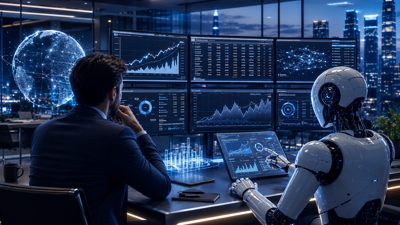
The more interesting story in 2026 isn't competition it's collaboration. Pairing human judgment with AI's speed is where creative work is actually heading.
What a Strong Human-AI Creative Workflow Looks Like
- Humans set the creative direction and intent the "why" behind the work
- AI generates multiple options quickly giving humans more raw material to react to
- Humans select, refine, and add emotional depth turning raw output into something meaningful
- AI handles repetitive or technical tasks freeing up time for higher-value creative thinking
Expert tip: Treat AI output as a first draft, not a final product. The strongest creative work in 2026 comes from professionals who use AI to expand their options, then apply human judgment to choose and shape the final result.
Common mistake to avoid: Publishing AI-generated content without human review or edits. Unreviewed AI output tends to read as generic and can carry factual or stylistic errors that a human editor would normally catch.
AI Copyright and Ethics: What Creators Need to Know
Who Owns AI-Generated Content?
Copyright law is still catching up with generative AI. As of 2026, the U.S. Copyright Office's position has been that AI-generated output qualifies for copyright protection only when a human provides "sufficient creative input" and writing a simple prompt does not, on its own, meet that bar. Several ongoing lawsuits from publishers, artists, and music companies are challenging whether training AI models on copyrighted material counts as fair use. Courts have been divided, with some viewing AI training as transformative and others warning it could undermine creative markets.
Note: Copyright law around AI is actively evolving and varies by jurisdiction. Always check current guidance from your country's copyright authority or consult a legal professional before making decisions based on AI-generated content ownership.
Will AI Replace Creative Jobs?
The honest picture is mixed, not one-sided.
Risks include:
- Displacement of some entry-level creative work
- Devaluation of certain routine creative skills
- Markets flooded with low-cost AI-generated content
- Downward pricing pressure on freelance creative work
Where humans keep the advantage:
- Roles that combine human judgment with AI speed tend to outperform either approach alone
- Creative direction, brand voice, and emotional storytelling remain human-led skills
- Professionals who can direct and edit AI tools effectively are becoming more valuable, not less
Best practices emerging in the industry:
- Fair compensation for artists whose work trains AI models
- Transparent attribution when AI tools are used in a final product
- Rights-based frameworks that respect creator consent
- Ongoing reskilling support for creative professionals adapting to AI tools
AI Art vs Human Art: A Side-by-Side Look
| Aspect | Human Art | AI-Generated Art |
|---|---|---|
| Personal voice | Reflects an individual style and perspective | Reflects patterns learned from training data |
| Lived experience | Rooted in real memory and emotion | No personal experience behind the output |
| Intent | Created with a specific, personal purpose | Generated to match a prompt or optimization goal |
| Emotional depth | Carries authentic emotional weight | Can mimic emotional tone without originating it |
| Speed | Slower, shaped by process and revision | Extremely fast, near-instant generation |
| Innovation style | Challenges assumptions, reimagines frameworks | Optimizes creatively within existing frameworks |
Can AI match human emotional depth in writing? Not yet, and arguably not ever in the same way. AI can generate coherent, well-structured text. Humans write with voice, personality, and the accumulated texture of a real life something a dataset can describe but not personally possess.
In terms of innovation, humans tend to excel at challenging assumptions and connecting unrelated ideas laterally. AI tends to optimize well within the frameworks it's already been trained on, rather than reimagining them from scratch.
The Future of Creativity: What to Expect Beyond 2026
Looking ahead, a few trends are already taking shape:
- Deeper human-AI collaboration tools, built specifically for creative workflows
- More sophisticated AI-assisted creativity systems that adapt to individual creative styles
- Better integration of AI into creative job roles, rather than AI replacing those roles outright
- New forms of blended human-AI design, where the line between "AI-made" and "human-made" gets harder to draw
The long-term impact of AI on human expression will depend heavily on the choices individuals, companies, and regulators make now. Early signals suggest that as AI makes technical proficiency more common and accessible, authenticity and genuine emotional connection are likely to become more valuable, not less. Professionals who are comfortable working fluently with both human creative instinct and AI tools sometimes called "AI-native and human-native" creators are positioned to be in the strongest spot.
Final Thoughts
Human creativity and artificial intelligence aren't really rivals fighting for the same title. They're different kinds of tools solving different kinds of problems. AI brings speed, scale, and tireless pattern generation. Humans bring emotional truth, lived experience, and the ability to reimagine the rules entirely.
The real opportunity isn't picking a side it's learning to combine both well. Creators, businesses, and professionals who treat AI as a collaborator rather than a replacement are the ones most likely to unlock genuinely new creative possibilities in the years ahead.
Key Takeaways
- Human creativity is driven by lived experience, emotion, and imagination; AI creativity is driven by pattern recognition across large datasets.
- AI has a clear edge in speed and scale, but it lacks genuine emotional stake and deep cultural understanding.
- The most effective creative approach in 2026 combines human direction with AI-generated options not one replacing the other.
- Copyright law currently requires meaningful human creative input for AI-assisted work to be protected; a prompt alone typically isn't enough (verify current rules in your jurisdiction).
- AI is changing creative jobs more than it's eliminating them professionals who can direct and edit AI tools are gaining an advantage.
- Authenticity and emotional connection are likely to become more valuable, not less, as AI makes technical output more common.