Meta Ads vs Google Ads: Which Is Better for Small Businesses in 2026?
Naapbooks Insights • Meta Ads vs Google Ads • 5 min read
If you're running a small business, you need customers online. But should you use Meta ads or Google ads?
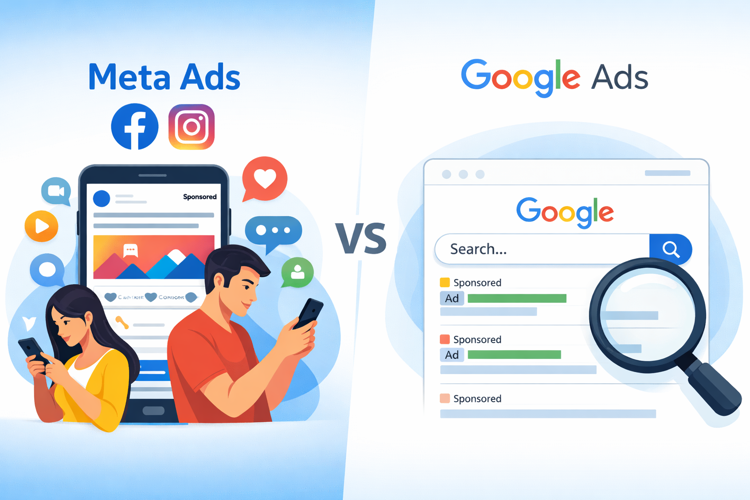
The difference between Meta ads and Google ads is actually simple. Meta shows ads to people scrolling on social media. Google shows ads to people actively searching. This guide helps you pick the right one for your business.
What Are Meta Ads?
Meta ads are the sponsored posts you see on Facebook and Instagram. They appear between regular posts from friends and family.
How Meta ads work: You tell Meta who your ideal customer is (age, location, interests), and they show your ads to those people. You're not waiting for searches. You're introducing your business while people browse.
Meta ads for small business work great for:
- Building brand awareness when nobody knows you yet
- Getting leads through simple forms
- Selling products that look good in photos
Instagram ads for ecommerce
brands are especially powerful because people love discovering new products while scrolling.
What Are Google Ads?
Google ads appear when someone types a question into Google. You see them at the top with a "Sponsored" label.
How Google ads work: When someone searches "plumber near me" or "buy running shoes," your ad shows up. You're catching people who already want what you sell.
Google ads for small business are perfect for:
- Google ads for local services like dentists or electricians
- Catching people ready to buy right now
- Getting immediate sales from motivated searchers
With pay per click on advertising, you only pay when someone clicks on your ad.
Main Difference: Push vs Pull Marketing
Here's the biggest meta-ads vs google ads differences:
Meta pushes your business to people who might be interested. Think of it like handing out flyers at a mall.
Google pulls interested people to you. It's like setting up exactly where people are asking for directions to your store.
The buyer mindset meta vs google is completely different. Meta users are relaxing. Google users are problem solving.
Cost Comparison
Meta ads typically run from ₹46 to ₹184 per click. Google ads cost per click ranges from ₹92 to ₹920 or more.
Meta is usually the cheapest online ad platform by clicking. But Google often converts better because searchers are ready to buy.
For advertising budget for small businesses, Meta stretches dollars further when building awareness. Google delivers faster sales despite higher costs.
Which Works Faster?
Google ads fast results are real. Launch today, get calls tomorrow. Perfect for ads for immediate sales.
Facebook ads results time frame takes longer. You're building awareness first. Results improve after 30 to 60 days.
Think short term vs long term ads: Google wins for quick cash. Meta wins for steady growth.
Best Choice by Business Type
Best ads for local business like plumbers or lawyers? Choose Google. When someone searches for an "emergency dentist," they need help now.
Facebook ads for ecommerce stores selling clothes, beauty products, or home decor? Choose Meta. Visual products sell well on Instagram.
Best ads for startups building a new brand? Start with Meta to get your name out there.
Advertising for coaching business or consultants? Meta lets you target specific professional groups.
Which Should You Choose?
The best advertising platform 2026 depends on your goal.
Choose Meta when you:
- Sell visually appealing products
- Need to build brand awareness
- Want lower costs per click
Choose Google when you:
- Offer services people search for
- Need customers today
- Want high intent traffic
Simple Tips to Get Started
Start at ₹920 to ₹1840 per day. Pick one platform first. Don't split your budget too early.
Track everything from day one: clicks, leads, sales, and costs. Give your campaign two weeks before making big changes.
The best small business marketing strategy is the one you'll stick with. Pick your platform, learn it well, and give it time to work.
Your customers are out there. You just need to show up where they're looking.