Blockchain Beyond Crypto: Real-World Use Cases That Actually Matter
Naapbooks Insights • Crypto: Real-World • 5 min read
Most people hear the word blockchain technology and immediately think of Bitcoin or crypto trading. That connection is understandable, but it only tells a small part of the story. In reality, blockchain is a much bigger idea, and in 2026, it is reshaping industries far beyond digital currencies.
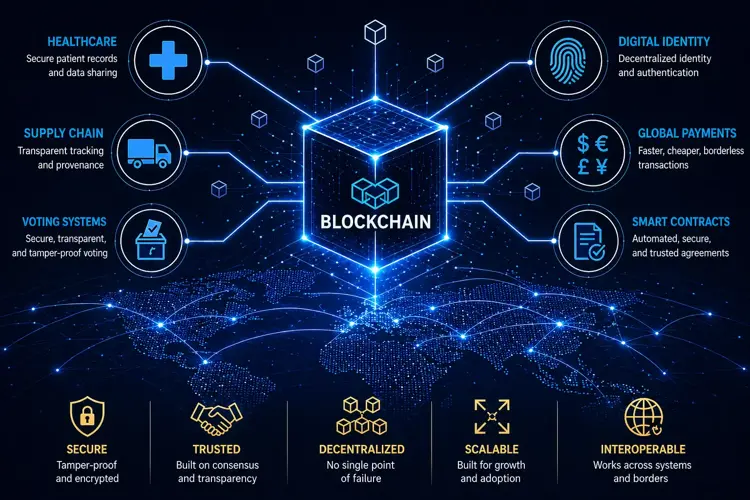
The common misconception that blockchain vs Bitcoin is the whole conversation has held back a lot of businesses from exploring its real potential. The truth is, blockchain applications now span healthcare, supply chains, government, finance, and more. The shift toward blockchain adoption in the real world has been steady, and the results are hard to ignore.
This blog breaks down exactly what blockchain technology is, why it matters beyond coins and tokens, and which are already delivering real value right now.
What is Blockchain?
At its core, blockchain is a distributed ledger that records data across a network of computers. No single person or company controls it. Every record added to the chain is verified by the network and cannot be changed once it is written.
Here are the three features that make it powerful:
- Blockchain transparency: Every participant in the network can see the same data in real time.
- Immutable ledger: Once data is recorded, it cannot be altered or deleted, creating a permanent audit trail.
- Blockchain security: Data is encrypted and linked in blocks, making tampering extremely difficult.
A simple blockchain vs database comparison tells the story well. Traditional databases are controlled by a central authority. A decentralized system removes that single point of failure entirely. This is the foundation of blockchain architecture and the reason it is trusted for high-stakes data.
Why Blockchain is Valuable Beyond Cryptocurrency
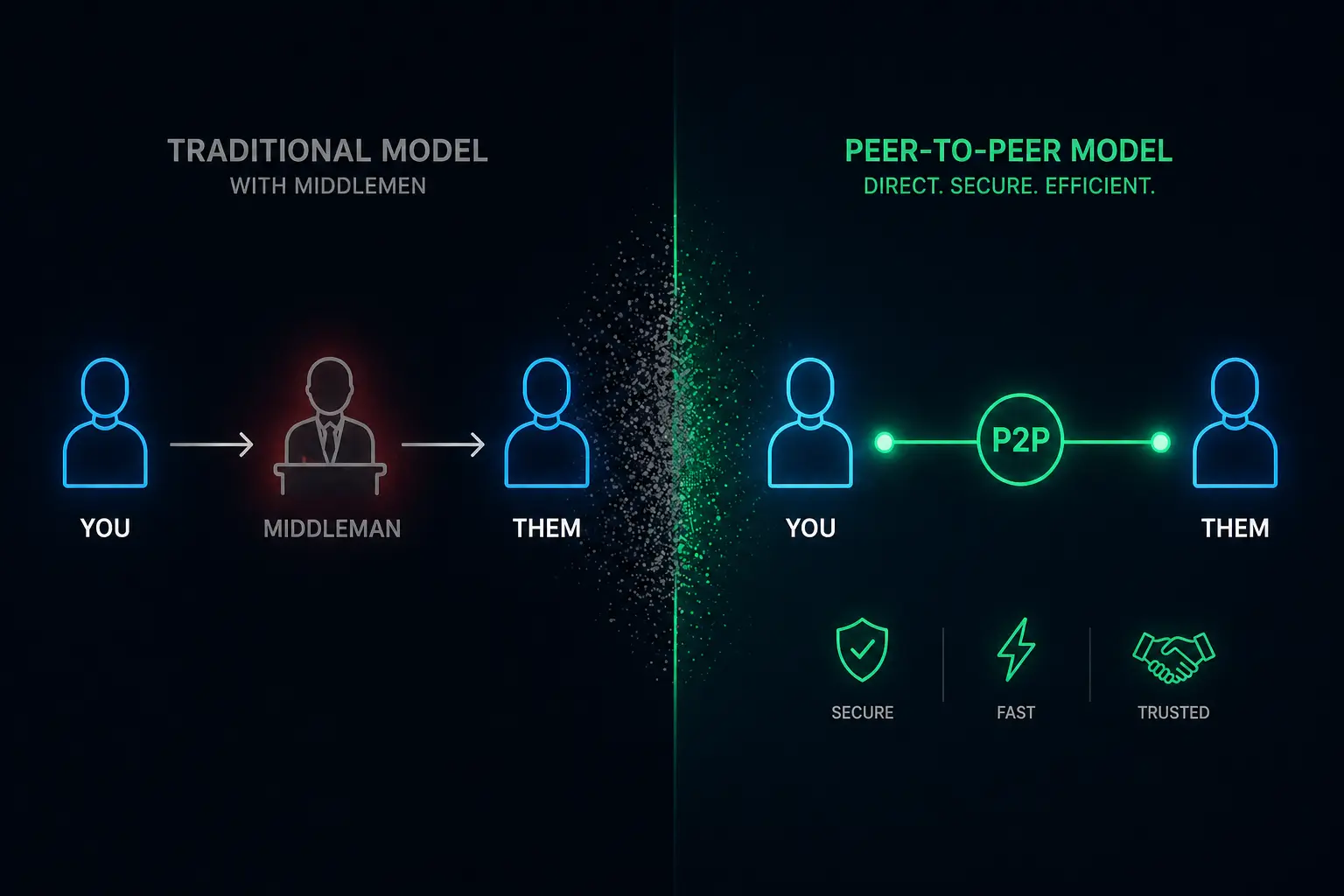
The real power of blockchain beyond cryptocurrency lies in how it changes trust. Normally, we rely on banks, governments, or lawyers to verify transactions. Blockchain makes that verification automatic and transparent.
Here is why businesses are paying close attention:
- Trustless systems: Two parties can transact without needing to trust each other because the blockchain enforces the rules automatically.
- Fraud prevention technology: Immutable records make it nearly impossible to falsify data or manipulate results.
- Blockchain efficiency: Processes that used to take days can now happen in minutes.
- Blockchain advantages: Removing intermediaries cuts operational costs significantly.
For blockchain for enterprises, the pitch is simple: better data, lower costs, and stronger trust with customers and partners. Enterprise blockchain solutions are no longer experimental. They are being deployed at scale across major industries right now.
4. Major Real-World Use Cases
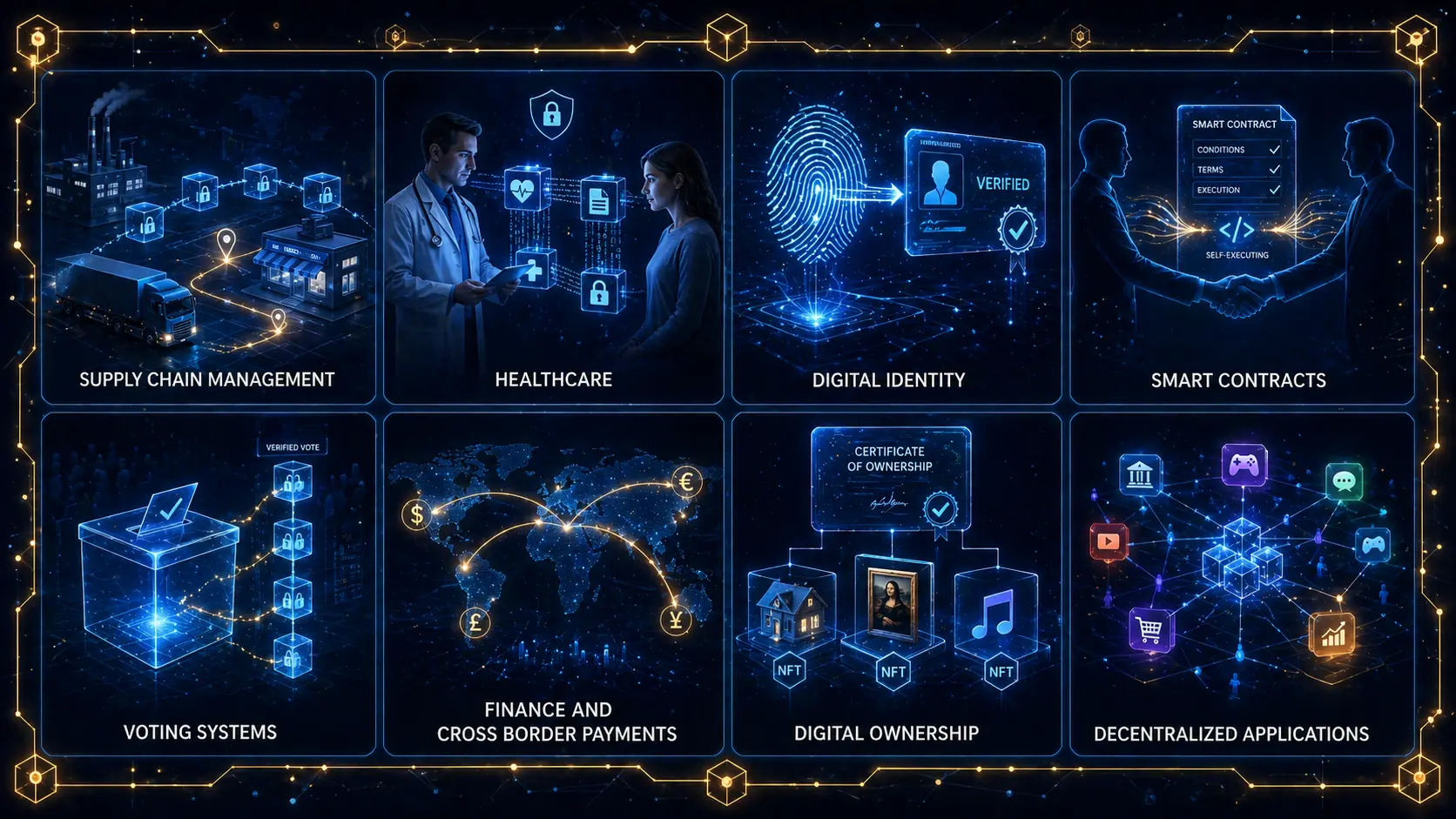
1. Supply Chain Management
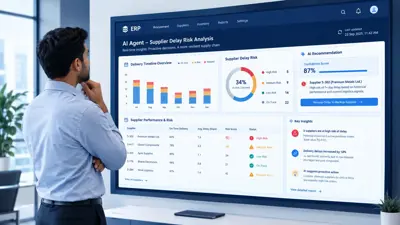
Blockchain supply chain solutions are already being used by major companies to track products from factory floor to store shelf. The ability to verify every step in a product's journey is called product traceability, and it is changing how businesses handle recalls, fraud, and delays.
- Supply chain transparency: Buyers can see exactly where a product came from and how it moved.
- Anti-counterfeit technology: Fake goods are flagged instantly because they cannot match the verified blockchain record.
- Logistics blockchain: Real-time data sharing across shipping partners reduces bottlenecks and costly errors.
Supply chain digitization through blockchain is not a future idea. It is live and working in food safety, pharmaceuticals, and manufacturing today.
2. Healthcare
Patient data is sensitive, fragmented, and often siloed across different hospital systems. Blockchain healthcare solves this by creating a shared, secure record that only authorized parties can access.
- Electronic health records: Stored on blockchain so they follow the patient, not the hospital.
- Patient data privacy: Encryption and permission controls keep data safe from breaches.
- Healthcare interoperability: Different health systems can share data seamlessly without compromising security.
The result is better care, fewer medical errors, and stronger health data security. Several programs in 2025 showed measurable improvements in medical data sharing between hospitals using blockchain infrastructure.
3. Digital Identity
Digital identity is one of the fastest-growing use cases. Today, your identity is stored in dozens of databases you do not control. Self-sovereign identity flips this entirely: you own your credentials, and you decide who sees them.
- Identity theft prevention: Decentralized records are far harder to hack than centralized databases.
- Identity verification: Businesses can verify users without storing sensitive data themselves.
- KYC blockchain: Banks and fintech companies are using blockchain to streamline Know Your Customer checks faster and more securely.
Governments are also exploring decentralized identity for e-governance, passport verification, and digital ID programs. This makes public services faster and far more secure for citizens.
4. Smart Contracts
Smart contracts are self-executing agreements written in code. When the agreed conditions are met, the contract executes automatically with no need for a lawyer or notary. They run on smart contract platforms like Ethereum.
Here is how they are already being used:
- Contract automation: Real estate transactions close faster because payments and title transfers happen automatically once conditions are verified.
- Blockchain legal tech: Insurance claims are processed instantly when verified conditions are met, removing long delays.
- Digital agreements: Freelancers and clients use smart contracts to ensure payment is released only when work is delivered and confirmed.
The beauty of Ethereum smart contracts is that they are transparent and tamper-proof. Both parties see the same code, and no one can change it after it has been signed.
5. Voting Systems
Blockchain voting systems offer a way to run elections that are transparent, verifiable, and resistant to manipulation. Every vote becomes a permanent record on the blockchain, visible to auditors but anonymous to the public.
- Tamper proof voting: Once cast, votes cannot be altered or deleted under any circumstance.
- Election security: The decentralized nature removes single points of attack that bad actors could target.
- Digital democracy: Remote and online voting becomes far more trustworthy when backed by blockchain verification.
That said, e voting security still faces real challenges including voter authentication and public trust in new systems. Blockchain does not solve all of these, but it makes the tallying process significantly more reliable and auditable.
6. Finance and Cross-Border Payments
Cross border payments using traditional banking can take 3 to 5 days and come with high fees. Blockchain finance cuts that down to minutes, often at a fraction of the cost.
- Decentralized finance: Open financial systems that anyone with internet access can participate in.
- Financial inclusion: People in underbanked regions can access global financial services for the first time in their lives.
- Global payments network: Businesses can pay suppliers and employees anywhere in the world with fewer delays and lower fees.
Fintech blockchain startups and traditional banks alike are now building on this technology. The payment processing technology is more mature than ever, and adoption is accelerating fast across emerging markets.
7. Digital Ownership (NFTs and Assets)
Beyond art and collectibles, digital ownership through blockchain has very practical real-world uses. Asset tokenization allows physical assets like real estate or fine art to be divided into digital tokens that can be bought and sold globally without paperwork.
- NFT use cases: Concert tickets, software licenses, and real estate deeds stored as NFTs prevent forgery and simplify transfers.
- Creator economy: Artists and musicians can sell directly to fans and earn royalties automatically through smart contracts.
- Digital collectibles: Verifiable scarcity and ownership records give digital items genuine market value.
Blockchain ownership records are transparent and permanent, which makes disputes over who owns what far easier to resolve.
8. Decentralized Applications (DApps)
Decentralized applications, or DApps, run on blockchain networks instead of company-owned servers. This means no single entity controls them, and they cannot be shut down by a corporation or government on a whim.
- Web3 applications: The next generation of apps where users own their own data.
- DApp development: Developers build on open platforms, creating apps for finance, gaming, social media, and beyond.
- Blockchain ecosystem: A growing network of tools, protocols, and communities supporting decentralized software at scale.
Web3 platforms like Ethereum and Solana now host thousands of DApps. The user experience has improved dramatically in recent years, bringing Web3 technology closer to everyday mainstream use.
Challenges and Limitations
For all its promise, blockchain technology still has real obstacles to work through. Understanding these is important before diving in.
- Blockchain scalability: Most public blockchains can only process a limited number of transactions per second, which becomes a serious problem at scale.
- Blockchain regulation: Laws around blockchain and crypto vary widely by country, creating uncertainty for businesses trying to plan long-term.
- Energy consumption blockchain: Proof-of-work systems use significant electricity, though newer proof-of-stake systems are far more efficient and gaining ground.
- Adoption challenges: Many businesses lack the technical knowledge to implement blockchain solutions, and replacing legacy systems is never simple.
These blockchain limitations are real, but they are being actively worked on. The technology is maturing, and practical solutions are emerging for each of these pain points year by year.
Future of Blockchain Technology
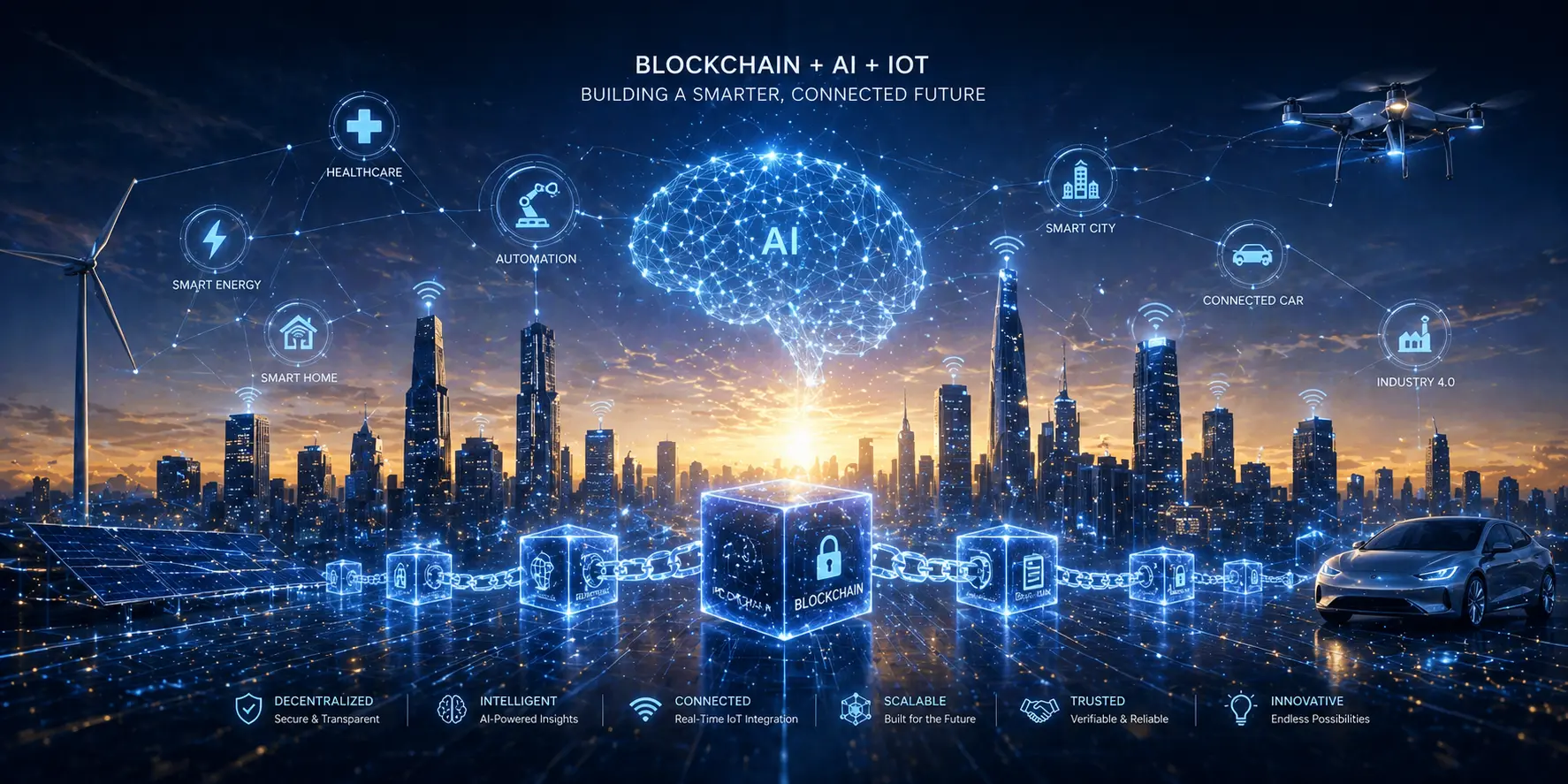
The future of blockchain looks very different from where it started. The next wave is about integration, not isolation. Blockchain is being woven into other technologies to create systems that are smarter and far more connected.
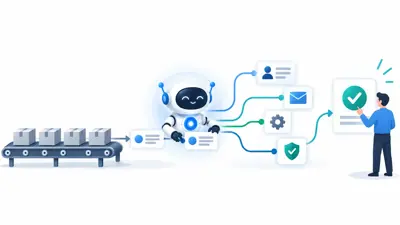
- AI and blockchain: AI can analyze blockchain data for fraud detection, while blockchain can verify AI outputs, creating more trustworthy and accountable systems.
- Blockchain IoT: Connected devices can record data directly to a blockchain, making supply chains and smart cities more transparent and efficient.
- Enterprise blockchain: Large corporations are moving from pilot projects to full deployments, especially in finance and logistics.
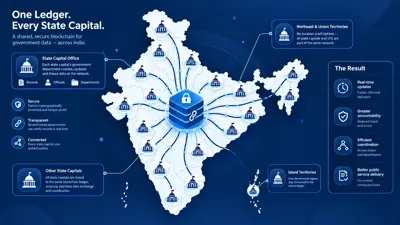
- Government blockchain: Public sector use is growing fast, from land registries to tax collection and national identity systems.
Looking at blockchain adoption trends, the next 5 to 10 years will likely see blockchain become invisible infrastructure, the same way the internet works today. Most people will use it without ever knowing it.
Blockchain innovation is also moving toward greater interoperability between chains, making it easier for different blockchain networks to communicate and share data. This will unlock entirely new possibilities across every industry.
Conclusion
Blockchain transformation is already well underway. From secure patient records to tamper-proof elections and instant global payments, blockchain in real world settings is proving its value every single day.
The key takeaway is simple: blockchain is not just a crypto tool. It is a foundational technology that builds trust, removes friction, and creates accountability in systems that genuinely need it. The blockchain business value is clear, and companies investing in it today are positioning themselves for a real advantage in the years ahead.
As blockchain ecosystem growth continues, the question is no longer whether this technology matters. It is how quickly industries are willing to adopt it and how creatively they apply it to real problems. The opportunity is enormous, and it goes far beyond anything crypto ever promised.