Human Creativity vs Artificial Intelligence: Who Wins?

Naapbooks Insights • Creativity vs AI • 11 min read
- What is Artificial Intelligence and Human Creativity?
- Human Creativity Examples: Emotion, Experience, and Intuition
- AI Creativity: Data Driven Innovation and Pattern Recognition
- Human AI Collaboration Strategies: Working Together
- AI Copyright Laws 2025 and Ethical Issues
- AI Art vs Human Art Comparison Across Domains
- Future of AI Creativity 2030 and Beyond
- Final Thoughts
The world is changing faster than ever in 2026. Machines now paint masterpieces, write compelling stories, and compose symphonies that top the charts. But can they truly be creative? This question matters more than ever as generative AI floods our feeds with art, music, and text that looks surprisingly human.
At the heart of this debate lies a simple truth: what is human creativity and how does it compare to what machines produce? The answer isn't about picking a winner. It's about understanding what makes each approach unique and powerful in the creative landscape of today.
What is Artificial Intelligence and Human Creativity?
Understanding Human Creativity
Human creativity is the ability to generate original ideas that solve problems, express emotions, or imagine new possibilities. It goes beyond simple novelty. True creativity connects deeply with:
- Original ideas born from personal experience and lived reality
- Emotional resonance that touches others on a deeply human level
- The power of human imagination to envision what doesn't exist
- Problem-solving that breaks conventional rules and defies algorithmic prediction
Creative thinking techniques used by humans often involve intuition, emotional depth, and the ability to connect seemingly unrelated concepts in meaningful ways. The difference between AI and human intelligence remains fundamental in 2026: AI processes data and identifies patterns with unprecedented speed. Humans create meaning from lived experience, cultural context, and emotional truth.
Human Creativity Examples: Emotion, Experience, and Intuition
The Depth of Emotional Creativity
Humans create from a place machines cannot access: genuine feeling. When an artist paints grief after personal loss, a musician composes joy from their first love, or a writer captures the complexity of human relationships, they draw from real experience. This emotional creativity psychology shapes work that resonates because it's authentic something that remained irreplaceable in 2026.
Human creativity examples from 2026 include painters channeling personal trauma into visual art that sparks global conversations, composers writing music inspired by their cultural heritage creating fusion genres AI couldn't predict, authors crafting characters based on people they've known, and designers solving problems they've personally faced with genuine empathy.
Intuition in the Creative Process
The role of intuition in the creative process continues to set humans apart. We make leaps that defy logic. We sense when something feels right even if we cannot explain why. This gut feeling guides creative problem solving strategies in ways algorithms cannot replicate, no matter how sophisticated their training data.
Human imagination operates within rich cultural and historical frameworks. A Japanese artist brings different sensibilities than a Brazilian one. Context matters profoundly. Inspirational stories of human innovation often emerge from specific cultural moments that give work deeper meaning something AI can reference but not authentically embody.
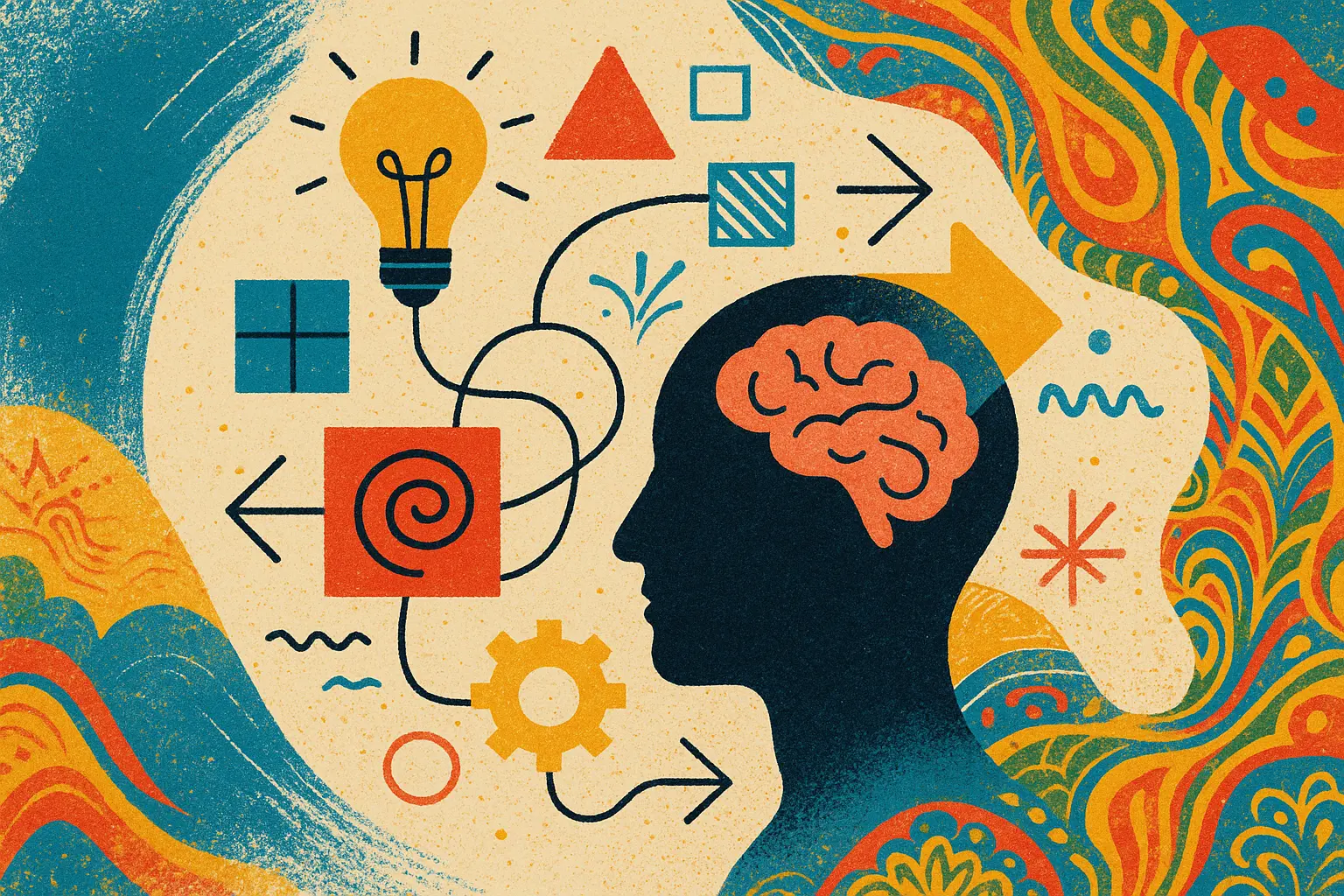
AI Creativity: Data Driven Innovation and Pattern Recognition
How AI Image Generation Works
AI generated content creation follows a process: training on massive datasets, identifying statistical patterns, combining learned elements in novel ways, and generating outputs based on prompts.
Speed and Scale of AI Creative Tools
AI design tools for creatives offer advantages humans cannot match.AI music generator software like ElevenLabs' Eleven Music produces studio-quality compositions in seconds. AI writing tools for content generate thousands of words per minute with context-aware coherence. Best AI tools for creators like Adobe Firefly explore countless visual combinations instantly. Machines never tire or lose focus.
The Question: Is AI Art Considered Real Creativity?
This remains hotly debated. AI generated art combines existing elements in statistically novel ways, but lacks personal intent or lived experience. Examples of AI pattern recognition in art show impressive technical skill without emotional truth. The work can be beautiful, even surprising but is it creative in the human sense?
AI Limitations
Limitations of AI generated music and other content:
- No genuine emotional experience or personal stakes
- Cannot understand cultural nuance deeply only statistical patterns
- Lacks intentionality beyond optimization
- Risk of homogenization "algorithmic sameness" undermining creative diversity
Human AI Collaboration Strategies: Working Together
The most exciting frontier isn't competition but cooperation. Human AI collaboration combines the best of both approaches. Blended human AI design uses machine speed with human judgment, statistical power with emotional intelligence.
Building a human AI creative team looks like:
- Humans set creative direction and intent
- AI generates multiple options quickly
- Humans select, refine, and add emotional depth
- AI handles repetitive or technical tasks
AI Copyright Laws 2025 and Ethical Issues
AI Authorship and Ownership Rights
Who owns copyright on AI generated content? The law struggles to keep up. The U.S. Copyright Office maintains that AI-generated outputs qualify for copyright only when humans provide "sufficient creative input" and crucially, writing a prompt doesn't qualify as sufficient. Major lawsuits from publishers, artists, and music companies are challenging whether AI training constitutes fair use.
2026 has emerged as a pivotal year for AI copyright law. Following significant settlements and divided court rulings, judges are grappling with whether AI training requires licensing and compensation. Some courts view it as transformative innovation; others warn it could overwhelm creative markets.
Will AI Replace Creative Jobs?
The impact of generative AI on artist careers in 2026 is nuanced. Risks of AI in creativity include displacement of entry-level creative work, devaluation of certain skills, market flooding with cheap AI content, and pricing pressure. However, research suggests the decisive advantage comes from redesigning workflows around human-AI collaboration where human judgment and creativity are amplified by AI
Ethical guidelines for using AI in design emerging in 2026 emphasize fair compensation, transparent attribution, rights-based frameworks respecting creator consent, and investment in reskilling for creative professionals.
AI Art vs Human Art Comparison Across Domains
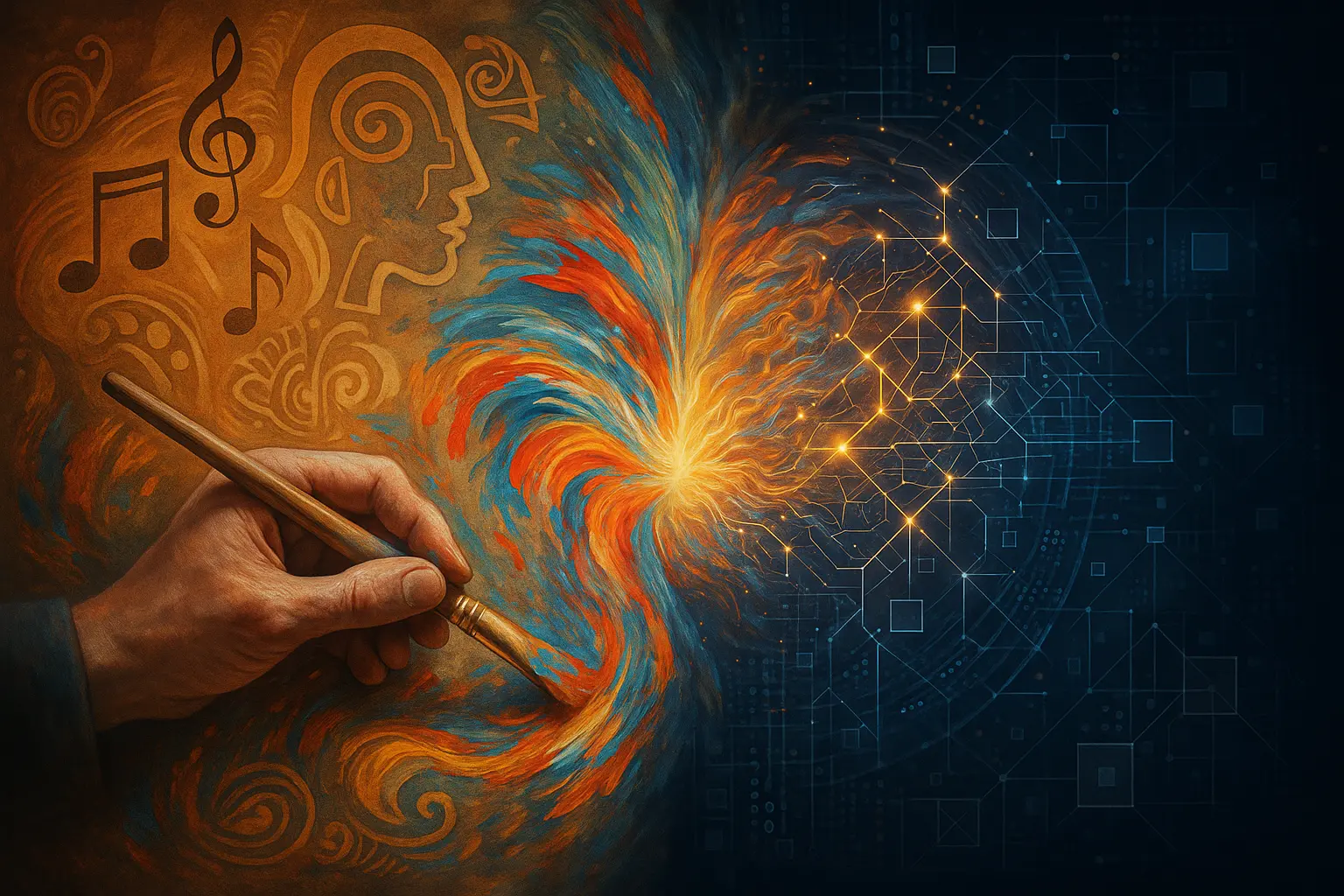
AI Art vs Human Art
Visual examples of AI vs human artwork reveal persistent differences. Human art contains personal voice and style, reflects lived experience authentically, carries intentional meaning, and shows emotional depth. AI generated art is technically proficient but lacks personal perspective, creates without understanding, and produces without true intent
Can AI match human emotional depth in writing? The question applies across all domains. Differences in AI and human creative processes show clearly: AI generates coherent text; humans write with voice, personality, and accumulated life experience. In human vs AI innovation capabilities, humans excel at challenging assumptions and lateral thinking. AI optimizes within existing frameworks. Humans reimagine the frameworks themselves.
Future of AI Creativity 2030 and Beyond
How AI Will Change Creativity
AI creativity trends to watch include:
- Deeper human AI collaboration tools
- More sophisticated AI assisted creativity systems
- Better integration in creative jobs of the future
- New forms of blended human AI design
The long term impact of AI on human expression depends on how we shape these tools. Predictions for creativity in 2030 suggest increased collaboration rather than replacement. Research emphasizes that authenticity and emotional connection gain premium value as AI makes technical proficiency more common. Hybrid roles emerge professionals who are "AI-native and human-native" command the highest value.
Final Thoughts
The Human creativity future looks bright, not because humans and AI compete, but because they collaborate. What once felt like a threat becomes a powerful tool when guided by human intention.
How AI will change creativity ultimately depends on the choices we make resisting holds us back, but working together unlocks new possibilities that neither humans nor machines could achieve alone. By choosing partnership over competition, AI + human future collaboration opens the door to creative potential.