How IT Services Are Transforming Businesses in 2026
Naapbooks Insights • Transforming Businesses • 5 min read
Think about the last time a business you used felt slow, outdated, or frustrating. Chances are, the problem was not the people. It was the technology behind them. In 2026, the gap between businesses that embrace IT services for business and those that ignore them is wider than ever.
Customers today expect faster responses, more personalized service, and seamless digital experiences. Competition has gone global. A small company in one city now competes with firms across continents. The only way to keep up is through smart, reliable business technology solutions that actually work for you.
Digital transformation services are no longer optional. They are a survival strategy. Companies that invested early are seeing real results: better efficiency, lower costs, and happier customers. Those that delayed are scrambling to catch up.
- Over 85% of businesses globally are accelerating their digital strategies in 2026
- Companies with modern IT support services report up to 40% faster decision making
- IT spending continues to grow as cloud and AI adoption rises across every industry
This blog breaks down how modern IT services are reshaping every corner of the business world, what technologies are leading that change, and what it means for your company right now.
Evolution of IT Services: From Reactive to Proactive
Not long ago, IT support meant calling someone when your computer crashed. That was the old model. Slow, reactive, and expensive. Every hour a system was down meant lost revenue and frustrated employees.
The evolution of IT services has flipped this completely. Businesses no longer wait for things to break. They work with partners who monitor systems around the clock, spot issues before they become problems, and keep operations running without interruption.
Here is what that shift actually looks like:
- Traditional vs modern IT: Old IT fixed problems after they happened. New IT prevents them entirely
- The move to proactive IT support means monitoring, alerts, and automation handle most routine tasks automatically
- IT modernization strategies now include cloud migration, AI integration, and real time analytics
- Managed IT evolution has made enterprise level technology accessible to businesses of all sizes
- The future of IT industry is one where technology leads business growth, not just supports it
This is not just a technical change. It is a mindset change. IT is now a strategic business function, and the companies that treat it that way are the ones pulling ahead.
Key Technologies Driving Transformation
Several latest IT technologies 2026 are doing the heavy lifting when it comes to business transformation. Here is a close look at the ones that matter most right now.
3.1 Artificial Intelligence and Machine Learning
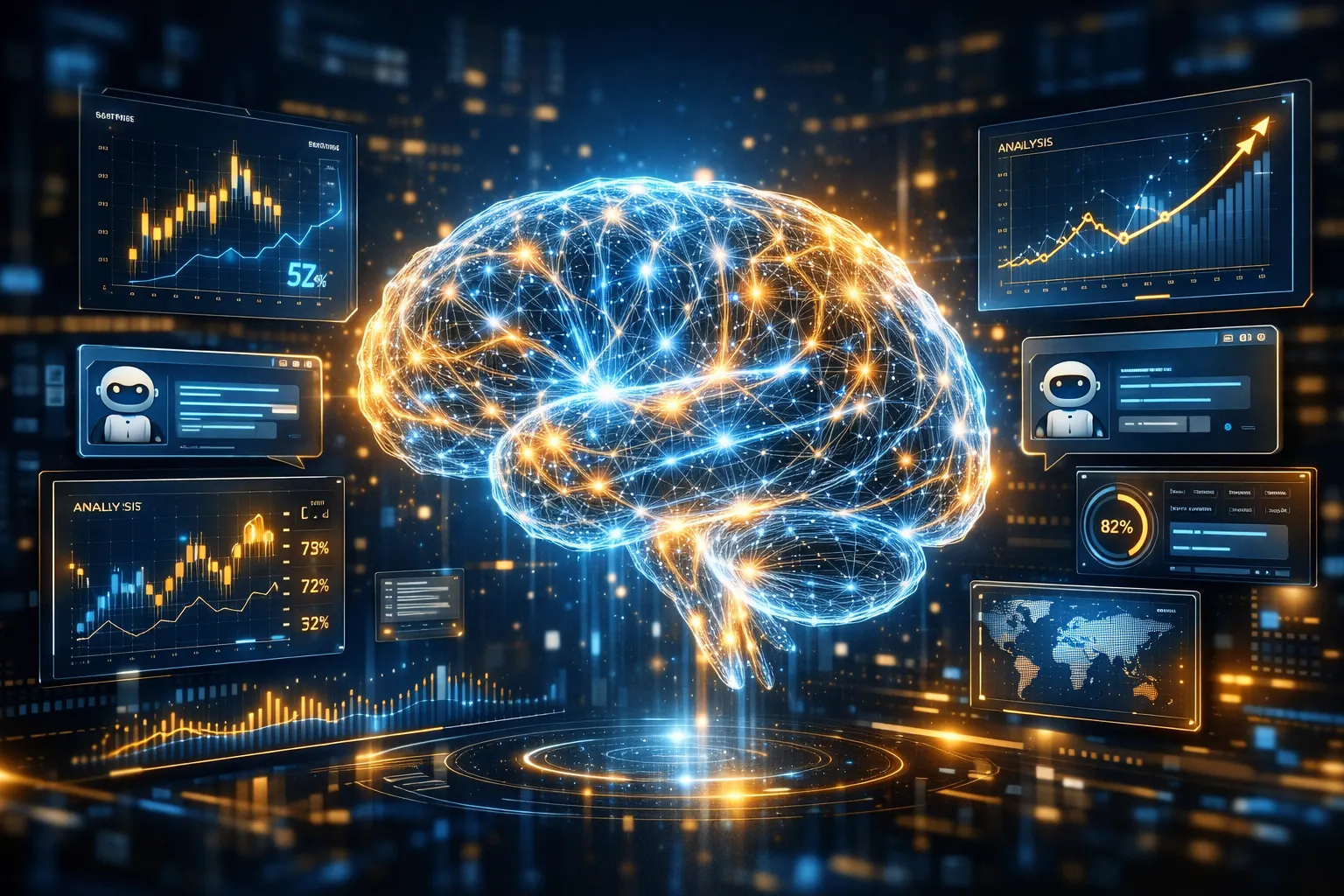
AI has moved from the lab to the boardroom. Businesses are using AI in business operations to automate repetitive tasks, predict customer needs, and make faster decisions based on real data instead of gut feelings.
- Smart automation handles invoicing, scheduling, and customer queries without human input
- Predictive analytics help businesses spot trends and problems before they happen
- AI powered chatbots and virtual assistants are handling thousands of customer conversations simultaneously
- Machine learning applications are improving fraud detection, product recommendations, and supply chain planning every single day
3.2 Cloud Computing Solutions
The shift to cloud is one of the biggest changes in modern business history. Cloud computing solutions give companies the ability to scale their infrastructure up or down based on need, without massive upfront investment or physical hardware headaches.
- Remote access allows teams to work from anywhere, supporting hybrid and fully distributed workforces
- Pay as you go pricing eliminates waste and keeps costs predictable
- Built in disaster recovery and automatic backups protect businesses from data loss
- Companies using cloud consistently report faster product launches and better team collaboration
3.3 Cybersecurity Services
With more business happening online, the risk of attacks has grown sharply. Cybersecurity challenges 2026 include ransomware, phishing, AI generated threats, and supply chain attacks that are harder than ever to detect or predict.
- Zero trust security models verify every user and every device before granting access to anything
- Advanced cybersecurity services now include real time threat detection and automated response systems
- Data security problems cost businesses millions every year. Prevention is always far cheaper than recovery
3.4 Internet of Things in Business
The IoT in business connects physical devices to digital systems, creating a continuous stream of real time data that businesses can actually use. Factories track machine health. Hospitals monitor patients remotely. Logistics companies know exactly where every shipment is at any moment.
- Smart sensors reduce waste and unplanned downtime in manufacturing environments
- Healthcare devices transmit live patient data directly to doctors and care teams
- Logistics companies use IoT to predict delivery windows and optimize routes in real time
Industry-Wise Transformation
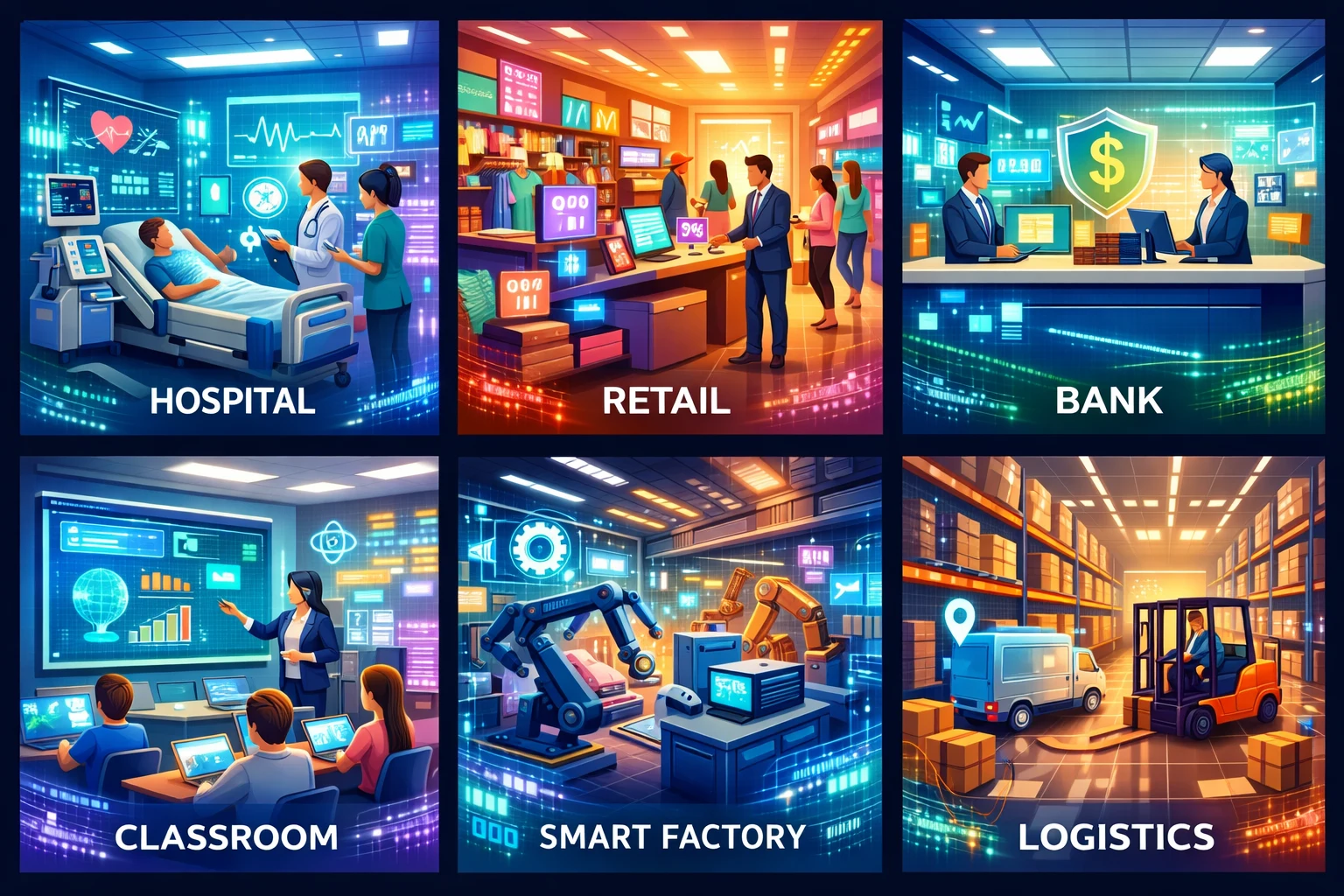
No sector has been left untouched by industry digital transformation. Here is how different industries are putting enterprise IT solutions to work in ways that actually move the needle.
4.1 Healthcare
Telemedicine has made quality healthcare accessible to millions who previously had limited options. Digital patient records mean any authorized provider can access full medical histories instantly, reducing errors and saving lives. IT solutions for healthcare are also powering AI assisted diagnostics and remote patient monitoring that simply did not exist five years ago.
4.2 Retail and E-Commerce
Retailers now use AI driven recommendations to show customers exactly what they are most likely to buy next. IT in retail industry goes far beyond online shopping. Smart inventory systems, contactless payments, and real time demand forecasting are now standard tools for any competitive retailer.
4.3 Finance and Banking
The finance sector has embraced fintech technology solutions at a remarkable pace. Mobile payments, digital wallets, and instant transfers are now expected by everyday consumers. On the back end, banks use AI to detect fraud in real time, flagging suspicious transactions before they cause any real damage.
4.4 Education
E-learning platforms have removed the geographic barrier from education entirely. Students can now access world class courses from anywhere with an internet connection. IT services for education also power virtual classrooms, automated grading, and personalized learning paths that adapt to each student's individual pace and needs.
4.5 Manufacturing
Smart factories represent the future of production. Smart manufacturing solutions combine robotics, IoT, and AI to create production lines that are faster, more accurate, and more efficient than anything traditional setups could offer. Industry 4.0 technologies are making predictive maintenance a reality, cutting unplanned downtime dramatically across the sector.
4.6 Logistics and Supply Chain
Real time tracking has completely changed what customers expect from delivery. Logistics IT solutions use GPS, IoT, and predictive analytics to tell you not just where a shipment is, but when it will arrive, often down to the hour. Business automation solutions are also optimizing warehouse operations from pick and pack all the way to final mile delivery.
Benefits of IT Services for Businesses
The benefits of IT services go far beyond just keeping computers running. They touch every part of how a business operates, competes, and grows.
- Improve business efficiency IT: Automation and smart tools eliminate manual work and speed up every core process
- Cost saving IT solutions: Cloud platforms and automation reduce overhead costs in ways that add up fast
- Scalable IT solutions: Your IT infrastructure grows with your business without requiring massive new investment each time
- Better customer experience: Faster, more reliable systems mean faster, more reliable service and customers absolutely notice
- IT services ROI: Businesses that invest smartly in technology consistently see measurable returns through lower costs and higher revenue
- Stronger decision making: Real time data and analytics give leadership genuine insight into what is working and what is not
If you are still asking why businesses need IT support, here is the simplest answer. Because staying still in 2026 means falling behind. There is no neutral position anymore.
Challenges Businesses Face in Digital Transformation
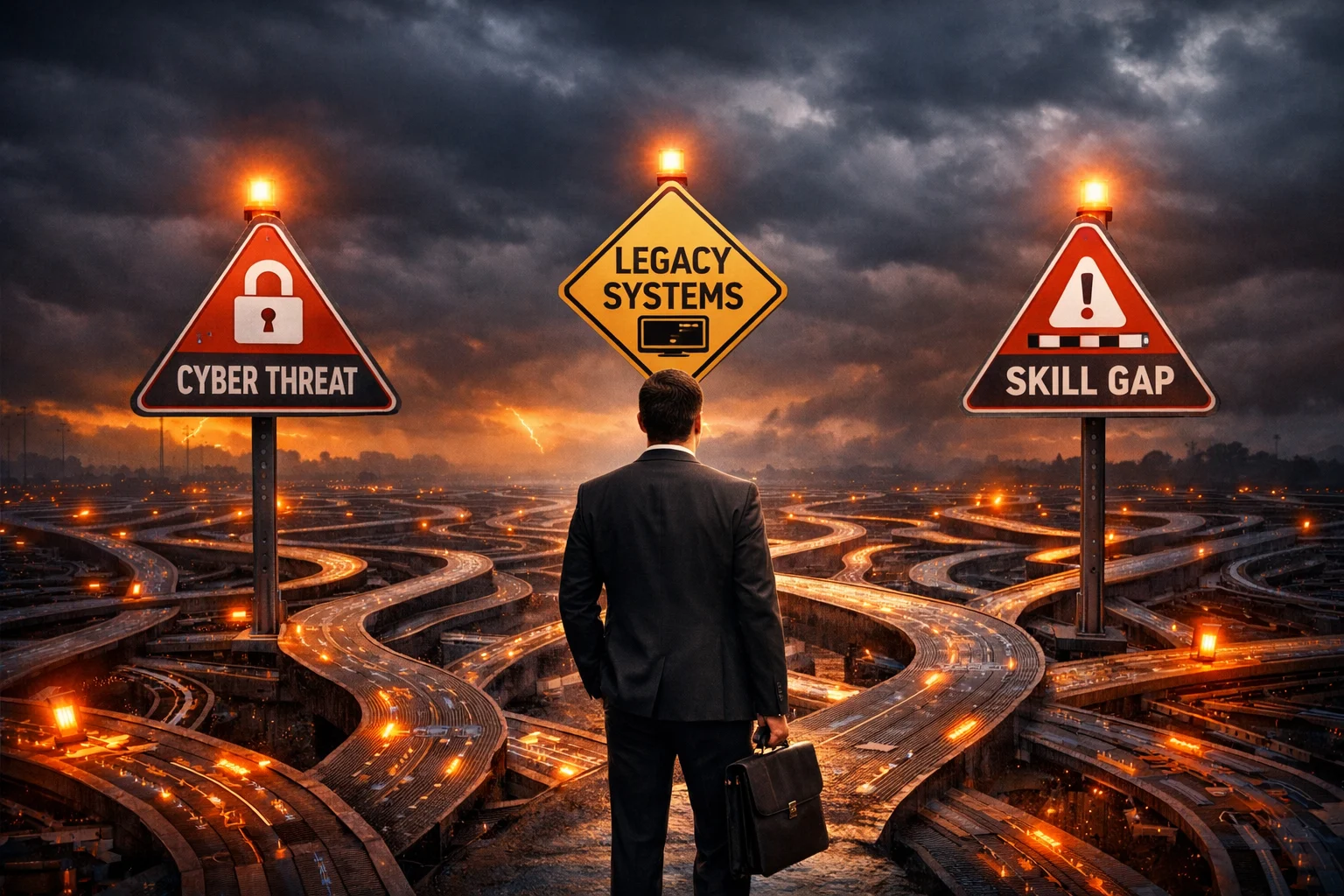
The path to digital transformation is real, but it is not always smooth. Knowing the IT challenges for businesses ahead of time is what separates companies that succeed from those that stall.
- Data security problems: More digital activity means more exposure. Businesses need protection in place before a breach happens, not after
- IT implementation issues: Changing systems while the business keeps running requires careful planning and the right partners
- Legacy system issues: Older infrastructure does not always work well with modern tools. Integration can be slow and costly
- IT skill shortage: Finding and keeping qualified IT professionals is a genuine challenge for companies of all sizes right now
- Technology adoption challenges: Getting teams to actually embrace new tools takes training, clear communication, and patience
- Business IT risks: Every new system adds potential points of failure. Risk management needs to be part of every IT strategy from day one
These challenges are very manageable. But they require honest planning and a willingness to invest in getting things right the first time.
The Role of Managed IT Services
Not every business can build or afford a large internal IT team. That is where managed IT services become a game changer. A managed service provider takes on the responsibility of running and maintaining your IT infrastructure so your team can focus completely on what they do best.
The benefits of managed IT services are straightforward and significant:
- Round the clock monitoring means problems are caught and resolved before they ever affect your business
- IT support outsourcing gives you access to a full team of experts at a fraction of the cost of hiring them in house
- IT service management keeps your systems updated, secure, and compliant at all times
- Managed cloud services keep your cloud infrastructure optimized and your costs under control
- Remote IT support means help is available instantly no matter where your team happens to be working from
- MSP services for business are fully scalable and grow alongside you as your needs change over time
Whether you are a startup finding your feet or an established enterprise looking to modernize, IT outsourcing services offer a practical and cost effective way to access the technology support your business actually needs.
Conclusion
Here is the truth. IT services for business are not just a cost on a spreadsheet. They are the engine behind business growth, customer satisfaction, and long term resilience. Whether it is AI, cloud, cybersecurity, or IoT, every major technology trend running through 2026 starts with a strong IT foundation underneath it.
Companies that treat IT as a strategic priority are growing faster, serving customers better, and operating more efficiently than those that still see it as just another expense. The connection between business growth with IT and real world results is no longer debatable. It is proven.
If your business is still running on outdated systems or struggling with IT infrastructure challenges, the best time to act was yesterday. The second best time is right now. Find a trusted IT solutions provider or IT consulting services team that understands your industry, your goals, and your budget.
The businesses that win in a digital-first world are not always the biggest. They are the smartest about how they use technology. Make sure yours is one of them.