The SaaS Trap: Is Your Business Model About to be Automated Out of Existence?

For over a decade, India dominated the global SaaS wave using two blunt but effective advantages: low cost and large teams. If the software didn’t fully work, we compensated with people. More onboarding. More support. More manual intervention.
That model worked until AI arrived.
In today’s AI vs SaaS reality, headcount is no longer a moat. It’s friction.
At Naapbooks, as we scaled from a startup into a BSE-listed enterprise, we reached an uncomfortable realization: clinging to the SaaS 2.0 mindset is the fastest way to irrelevance. The future of SaaS is not incremental; it’s existential.
India doesn’t need better SaaS.
India needs AI-first software.
1. The Death of the Staffing-Driven SaaS Model
In the traditional SaaS era, phrases like “we have a 50-member support team” signaled scale and execution.
In the AI era, they signal product failure.
AI doesn’t assist software anymore—it is the software.
- AI replacing SaaS workflows means execution is automated, not escalated
- One AI-augmented builder can now outperform an entire department
- Any SaaS product dependent on manual “hand-holding” is already overpriced
This is how AI is disrupting SaaS companies, not by features, but by eliminating labor entirely.
2. Why “We’re Cheaper Than X” No Longer Works
The most dangerous pitch in SaaS today is:
“We’re like X, but cheaper.”
Here’s why it fails in the AI vs traditional SaaS landscape:
- Execution is commoditized: Everyone has access to the same foundation models, OpenAI, Anthropic, Llama
- Automation destroys pricing moats: Your competitor can cut costs overnight with AI
- Switching costs are collapsing: Users can test five AI tools in minutes
In an AI-first software economy, loyalty is earned through outcomes, not invoices.
Competing on price is no longer a strategy; it’s a slow exit.
3. The New SaaS Gold Standard: Taste and Depth
Most “AI products” today are thin wrappers around generic models. That’s not innovation—that’s packaging.
To survive the future of SaaS, software must deliver two things exceptionally well:
Taste
Not just good UI, inevitable workflows.
- Smart defaults
- Minimal cognitive load
- Fast time-to-value
Great AI products feel obvious in hindsight.
Depth
Generic AI loses to domain intelligence.
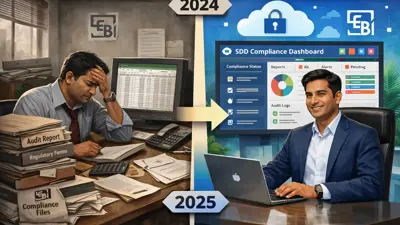
At Naapbooks, products like InsiderQ (SEBI Compliance) and VizMan (Visitor Management) win because they are deeply opinionated, regulation-aware, and context-rich. This is what separates AI-powered enterprise software from disposable tools.
Depth is the real moat.
4. India’s Real Advantage in the AI Era
India is one of the hardest environments to build software for—high volume, multilingual, regulation-heavy, and operationally chaotic.
That’s precisely why it’s our edge.
- If your AI survives Indian compliance, it survives anywhere
- Our eNotary pilot with the Government of Gujarat proved that reliability beats novelty
- The next generation of AI SaaS startups in India must win on context, not discounts
India should not export cheap SaaS.
India should export battle-tested AI systems.
What This Means for Leaders
For Founders
If you remove support teams and pricing arbitrage from your pitch, what remains?
If the answer isn’t product excellence, you’re already behind.
For Investors
Stop rewarding busy dashboards.
Start rewarding reliability engineering, AI depth, and domain mastery.
For Enterprises
Avoid shiny SaaS wrappers.
Choose partners building AI-first products, not automation theatre.
Final Thought: AI Is Not SaaS 3.0
AI isn’t the next version of SaaS.
It’s a different operating system altogether.
This is not a sequel—it’s a genre change.
The question is no longer “How do we sell SaaS better?”
It’s “How do we build software that works without people?”
That’s the real AI vs SaaS battle—and it has already begun.
Leverage the AI Shift with Naapbooks
At Naapbooks, we build AI-first enterprise software designed for real-world complexity—from compliance automation to operational intelligence. We help organizations in India, the US, and the UAE transition from staff-heavy SaaS models to precision-driven AI systems.
The future doesn’t belong to cheaper software.
It belongs to better systems.